Thursday, August 27, 2015

OUTDOOR PRODUCTS, APEX TREKKING POLE Review, by Terry Craig-The Disabled Hiker


Putting aside the obvious approval of my hiking companion TaSunka, if I had to choose one tool that was pivotal in allowing me to continue my adventures, I would have to say it is the walking stick, and more specifically, today's trekking poles. After my lung surgery, I began to use a single walking stick whenever I would hike or backpack. I had noticed other hikers using two walking sticks but always figured it would be more of a hindrance than a help. Until I tried it that is. 

On one particular outing, a friend had asked me to hold his walking stick while he ducked behind a tree to relieve himself. I agreed and told him I would walk up the trail a few yards and wait for him.
The second I put the pair of sticks to work as a third and fourth leg, the advantages became instantly clear. Suddenly I went from feeling like the typical biped to feeling like some giant four-legged spider, stretching its long front legs out to test the environment around him.

I was amazed at the stability and the quickness at which I could recover
when I stumbled even though I was not putting my full weight on any one of the hiking sticks. I felt myself using all four of my limbs instead of only the two that lie beneath my torso. And although was a silly thought, I felt like I could go anywhere.

Before I knew it, I had walked several hundred yards while experimenting and testing out my new found legs, leaving my hiking companion far behind. I found myself very disappointed when the first thing he asked for after catching up to me was his hiking stick back. From that moment on I knew exactly what I had to do. Find my own fourth leg.

Using one hiking stick always felt somewhat like I was using a crotch or a cane. But somehow using two walking sticks suddenly elevated me to the status of quadruped instead. I had to ask myself, how did this occur. How did using two walking sticks turn a crotch into an extra set of legs?

As the Internet was not such a big thing in those days, I set about doing my own research on the physics behind the single vs. double walking stick, question. I started calling it the three-legged dog theory, as I noticed that dogs who had lost the use of one front leg exhibited the same lopsidedness to their gate as I had using only one walking stick.

Another thing that became apparent was that I was doing myself no favors in the balanced department and adding significantly to the amount of pain I would have to deal with during and after my hike. Like a three-legged dog, that small amount of forward weight transfers to the ground like the front leg of a dog supports its forward weight.


Granted, the dogs forward weight is much greater than a bipedal backpacker puts on his walking stick. But we are talking about forces significant enough to notice right off, especially when that weight is ill
TaSunka comforts our lil Chante after a bad fall. Jan, 2015
distributed across your body. It literally becomes the difference between a steady limp and a steady gate. I.e.: The three-legged dog theory. And it still seems to apply despite our bipedal nature.


From that time on, the use of two trekking poles soon became a staple on all my expeditions. So when Outdoor Products agreed to send me their Apex Trekking Poles for review, I could hardly wait to hit the trail with them. But I must admit to a few reservations. Mainly because as most humans are, I am a creature of habit. 

Previously, I had always relied on one solid wooden hiking stick for my right and stronger side, and paired it with a collapsible trekking pole that I used for my left and weaker side. I had found that particular trekking pole back in the 90s after I had my three-legged dog epiphany. But my recent research found it would cost me nearly $180 (three times the original's cost) to purchase a matching pole.

I always had it in my mind that the heavier wooden walking stick could support my weight better should I fall. However even early on it was apparent that this logic was inherently flawed as it relied heavily on me only falling 50% of the time and only when the right walking stick was touching the ground.

Despite this flawed logic, I felt true apprehension when first putting aside that heavy wooden walking stick. Replacing both of my trusted walking sticks for the incredibly lightweight and matched set of Apex Trekking Poles, seemed almost wrong somehow. What if they weren't strong enough? Falling is a major fear for me out there, and reliable equipment is always a great concern to me. 

Deciding to take them out on a few day hikes to build confidence, the Apex trekking poles did not disappoint. The benefits of using two well matched and lightweight trekking poles over the heavier unmatched set became instantly apparent. Stumbling over the uneven ground, I instantly became aware of how much faster the reaction time was over the older and heavier set.

I've always kept a sort of priority list in my head of the items that I felt I should spend the most money on when it came to equipment. Knowing full well how many wooden walking sticks I had broken within those three-legged dog years, I realize that replacements were not only inevitable, but
Two of my old walking sticks gluing back together for display
because of their short lifespan, also held a very low position on that priority list. So spending a lot of money on trekking poles really didn't set well with me.


So it was pretty clear I was going to have to look at this product through a different set of expectations. i.e.: as a valued, trusted, rugged, yet easily replaceable piece of equipment.

Despite my initial skepticism, I must award the Apex Trekking Poles by Outdoor Products with a full complement of five stars. 
Well done Outdoor Products. For not only making a product we can rely on, but that we can also afford as well.

Take a look at what I found.


SPEC'S
~ Carry weight –  0.74 lbs. each/or 1.48 lbs.
~ Products Weight capacity – NOTE, product not meant to bear full weight of user.
~ Length – collapsed min: 26 inches, extends to a max: 53 inches


1. Initial appearance and impressions upon delivery –
* Appears to be in perfect condition and all moving parts functioning.

* Love the little grass boots for the tips.
 
2. Comparative price –
* The price is very reasonable when compared to other trekking polls of similar design and strength.
* In fact, the retail price was low enough where I actually considered purchasing a extra set in anticipation of the inevitable need for replacements. (Pennsylvania is extremely rough on trekking poles and walking sticks.)


3. How easy is the product to set up and use? –
* Set up was easy, again when compared to other trekking poles of similar design.
* NOTE; I would highly recommend that those with arthritis or dexterity issues in the hands get help adjusting, locking, and periodically checking the twist locks before setting out. [See number 8 for a great work-around idea]


4. Product Pros –
* Regardless of the condition or disability, the stability and dependability of our trekking poles is an absolute necessity. However, creating that while maintaining a reasonable price for the consumer, including those on a low or fixed income is a beautiful and all American thing to do. (Hats off to Outdoor Products on this one)

* The three different types of tips, two of which came separately with the
Apex Trekking Poles, help to maneuver through a wider variety of ground textures. Nice touch.
* The ergonomic design of the handles fit very well in the hand. The materials chosen to make the handle seems spot on and in spite of hot weather conditions has a sure grip feel without feeling sticky or tacky. The
ribs on the back of the handle were adequately designed to help keep the palm of the hand cool as well.

5. Product Cons –
* As I tend to use the straps on a trekking pole to help give my hands a break, I did notice a buckle on the strap slipping the more I relied on the strap. However I realize that this was due to the newness of the material and as the strap aged the buckle easily bit into the material.


6. Possible medical concerns – 
* I could find no medical concerns with the Apex Trekking Poles, save one. And PLEASE NOTE, it is inherent of all collapsible trekking poles. 

As Clearly Stated in the Manufacturers Instructions; it is your responsibility to make sure that all parts are securely locked into position before taking that first step. So PLEASE do not take this warning lightly.
I cannot over-stress the importance of inspecting all collapsible trekking poles from top to bottom, collapsible joints and straps, not only before starting out, but after each and every break along the way as well. 

A loose telescoping joint could lead to an unexpected and catastrophic failure of the trekking pole and the possibility of a serious injury from the resulting fall. So please note that you inspect your trekking poles often and confirm all joints are tightened securely.

7. Medical benefits of the product –
* Adds stability, balance, as well as supporting posture, all of which culminates in added safety and unexpected enhancements of speed as well.
* The above enhancements to stability and balance, etc., help to create a
renewed sense of independence for the disabled. Especially when in a wilderness setting.


8. Clinical Observation & Innovations–
* Arthritis/hand & arm pain Note; You might consider carrying a pair of jar lid grippers in your pocket (i.e.; the flat pieces of rubber used for opening jars around the kitchen) in order to get a more secure grip and twisting motion when locking the trekking pole joints.

* Will I be hanging up my wooden walking stick for good now? 
I don't know. For the moment, I am intrigued and swept up in the lightweight trekking pole movement. But as I stated previously, I'm a creature of habit. So only time will tell what new habits I'll form, and what habits I returned to.
But in the meantime, just as I'm sure you will, I'm enjoying the Apex trekking poles and making every mile count.


Till next time, happy hiking.
~ The Disabled Hiker ~


Apex Trekking Pole review  
by Terry Craig -The Disabled Hiker  ©2015


Photos by:
Larry Deitch,
Dawn & Terry Craig


Does your company make a piece of backpacking or hiking equipment that you feel would help the physically challenged to enjoy the wilderness with more confidence and ease? If so, I would love to review your product for my audience. We all deserve a little piece of the wilderness, and The Disabled Hiker is committed to helping everyone find that peace and tranquility that only the woods can provide. If you would like to help, please e-mail me, Terry Craig - The Disabled Hiker, at thedisabledhiker@gmail.com


Check out these other great links from THE DISABLED HIKER.

 The Disabled Hiker on YouTube

The Disabled Hiker on G+
The Disabled Hiker on FaceBook
The Disabled Hiker on Twitter

The Disabled Hiker on Pinterest

Terry Craig on YouTube

The Disabled Hiker on ReverbNation (music)
http://www.reverbnation.com/terrycraig?profile_view_source=header_icon_nav

The Disabled Hiker on SoundCloud (music)
https://soundcloud.com/terry-craig-2


Monday, August 3, 2015

Interview With A Thru-Hiker

Dennis 'Octopus' Plato, 

of The Bus Question blog 


Interview by Terry Craig- The Disabled Hiker


 rec: July 27, 2015, in Wind Gap, Pa.

I got to know Dennis Plato after watching one of his video equipment shakedowns on YouTube early this year. Dennis was already well into the planning stages to begin a complete hike of the Appalachian Trail, starting in Georgia and ending  on Mount Katahdin in Maine.

I had been looking for someone to follow on the Appalachian Trail in the hopes of meeting up with them here in Pennsylvania for an interview about their experiences. Dennis, who had not yet been given the trail name "Octopus" as of yet, seemed to be the perfect candidate.

Only a small percentage (est, 20% each year)  will actually finish the entire hike from Maine to Georgia. But I've got a funny feeling our friend Dennis 'Octopus' Plato will be among them.


I would like to take a moment to thank our friend Dennis Octopus Plato of The Bus Question blog
for stopping by to talk with us. 
We'll see you on the other side of Mount Katahdin.
Good luck my friend.
Terry
~ The Disabled Hiker ~
©2015

Check out Dennis Octopus Plato's blog at the following link
The Bus Question blog


 Check out these other great links from THE DISABLED HIKER.

Terry Craig on YouTube
The Disabled Hiker on YouTube 
The Disabled Hiker on MeWE.com
The Disabled Hiker on G+
The Disabled Hiker on FaceBook
The Disabled Hiker on Twitter
The Disabled Hiker on Pinterest
The Disabled Hiker on ReverbNation (music)
The Disabled Hiker on SoundCloud (music)
~~~~~~~~~~~~~~~~~~~~~~~~~~~~~~~~~
~~~~~~~~~~~~~~~~~~~~~~~~~~~~~~~~~~~~~~~~~~~~~
~~~~~~~~~~~~~~~~~~~~~~~~~~~~~~~~~

Monday, July 20, 2015

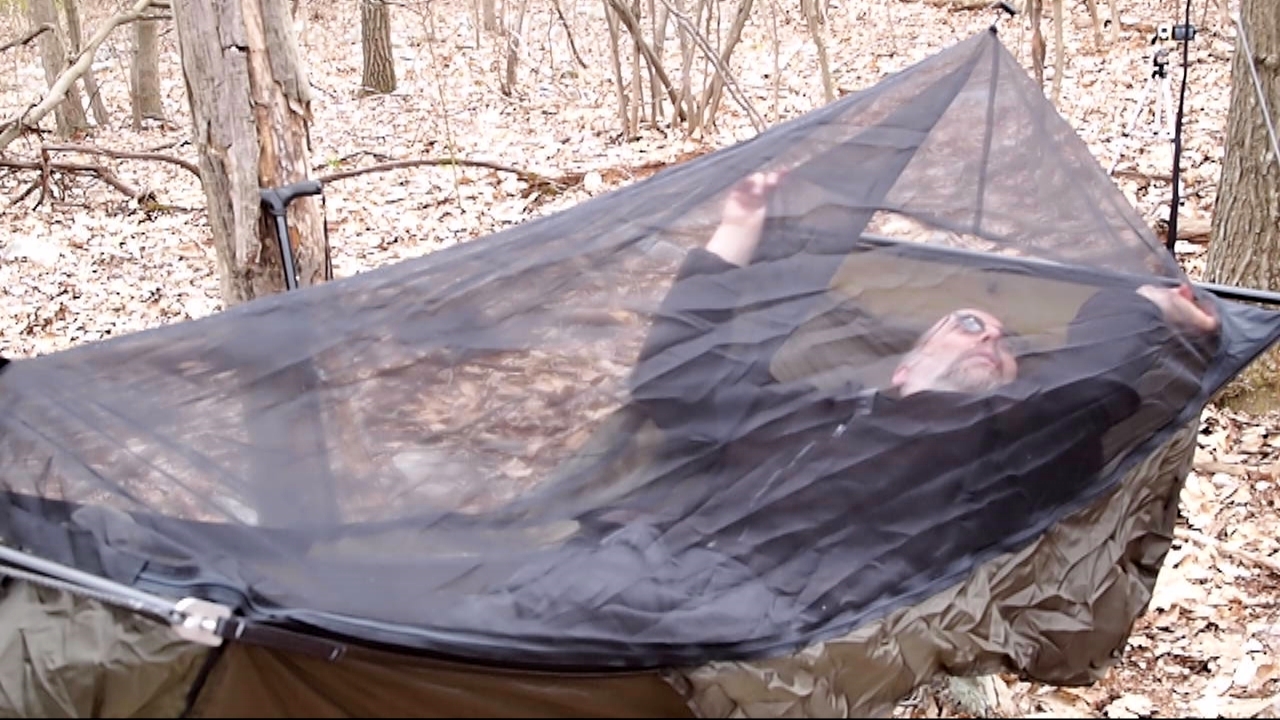
WARBONNET OUTDOORS, RIDGE RUNNER HAMMOCK Review, by Terry Craig - The Disabled Hiker

 
Trail Journal Entry: July 12, 2011. 3:25 AM
Once again talked myself into bringing the hammock on a backpacking trip. Once again drawn in by Imagining blissful breezes blowing across me on a hot summer night. Now I'm in horrible pain and have abandoned my hammock for the comforts of the hard, jagged, rocks below at 3 AM in the morning. Why is my hammock trying to crush me to death. When will I learn to leave that Damn Thing HOME ?!?!!!

When filming episode-1 of The Disabled Hiker, I had made several mistakes that ended up on the cutting room floor in the editing process. The worst of which would end up being the reason I never again filmed me using another backpackers hammock after that outing. Whereas the majority of people I've met with back problems and other physical handicaps, highly endorse this style hammock, I have found nothing but inevitable pain there.

Being that the ends of these hammocks were either whipped or channeled, (i.e. gathered at both ends,) I found that only after a few hours, the compression of the material around my shoulders and ribs would soon be increasing my pain levels and restricting my breathing. Eventually this would lead me to abandon my hammock for the preferred comforts of the rock covered ground.


The popular solution is to lay diagonally across the hammock so that you flatten out. But my physical issues made this near impossible to achieve for any length of time, much less maintain throughout the night.

Hammocks are one of the lightest ways to go when accessing the back-country. There is a harmony to it. A harmony where one can pretty much set up and sleep anywhere as long as there are two trees to hang between. And that can be exciting. And today, I'd like to get back some of that freedom I used to have.

As I pursued this thought, I thought about the back yard hammocks that have heavy wooden or metal spreader bars that would spread the material so that the hammock was less like a bean pod and more like an actual bed. Surely someone had to have adapted this idea by now for the modern backpacking hammock enthusiast.
After a little research, I found what I was looking for in the bridge style hammock being made by several manufacturers. However I quickly noticed, that most bridge style hammocks would not meet my specific needs or pain concerns. So I decided to write them down.


When identifying my specific needs, I found these five requirements soon took shape.
1. It needed to be extremely lightweight, including the spreader bars. 

2. It needed to have a relatively flat sleeping surface. 
3. It needed to be easy to get in and out of, even when using a sleeping bag. 
4. It was essential that the hammock did not wrap around me in any way. 
5. And, if that wasn't bad enough, I needed to be able to determine these things without actually purchasing the hammock itself via YouTube videos and online information.

I found the Ridge Runner Hammock by Warbonnet Outdoors relatively early in my search. Soon I found myself comparing the Ridge Runner to every other bridge style hammock I could find on the market. I'm sure these other bridge hammocks were not inferior in any way, but they didn't seem to fit my particular list of specific needs.

As only irony would have it, this hammock would get more of a trial on one of my expeditions, then I could have conceived of planning. After becoming incredibly ill due to the insect repellent I was using, I found myself exiting the hammock no less than eight times throughout the night to go throw up in the woods. Each time when exiting or returning to my hammock, I found myself completely amazed at how comfortable the Ridge Runner was to not only get in and out of, but the best of all was how comfortable it was to sleep in.

As you know, here on The Disabled Hiker we have a five-star rating system. I am extremely happy to bestow all five of these stars on the Ridge Runner hammock by Warbonnet Outdoors.
Here's what I found.


SPECS –
* Pack weight – 2.62 lbs. total.  Spreader bars = 0.75 lbs.

                                                    hammock body = 1.87 lbs.
* Pack size –  hammock body, 13.5 inches long. X 6 inch wide, cylindrical

                spreader bars, 20.25 inches long. X 2.25 inches wide (gathered)
* Max. weight capacity – 250 lbs. 


1. Initial appearance and impressions upon delivery –
* Appears to be in perfect condition and all parts accounted for.
* Love the double ended stuff sack.
* Curious that there was no bag for the spreader bars.


2. Comparative price –
* The Ridge Runner has an extremely competitive price when compared to other hammocks with spreader bars. However ...
* To be honest though, the Ridge Runner seemed to be in a class of its own, as I could not find a bridge style hammock that offered such a flat and level sleeping area. Therefore it seems silly to compare the price with these other bridge style hammocks. In my opinion, when keeping in mind the comfort level of the Ridge Runner this forced me to compare it to sleeping platforms many times its price. Such as the rigid sleeping platforms made for rock and mountain climbers.

3. How easy is the product to set up and use? –
* As instructed by the manufacture, the Ridge Runner has a slight learning curve to its set up. But once mastered, it's set up goes much faster than any other hammock I've used in the past.
Hats off to Warbonnet Outdoors on this one. By the time I'd set it up for the third time, I was in love with how fast the Ridge Runner sets up.
* I was extremely impressed by the suspension buckle system. Although it took a bit of getting used to, once I mastered it, I was impressed by its

simplicity and its strength. To make it even easier for those who struggle with pain in the fingers and hands, I found a trick to make it easier for those who still struggle with the buckles. (ref. #6 below for more)

4. Product Pros –
* As I used the Ridge Runner hammock, I was amazed at how easily I was able to get in and out. I always hurt myself getting in and out of my other hammocks, especially when getting into a sleeping bag at the same

time. It's a sure thing every time. Added pain I just don't need. Yet every time I've used the Ridge Runner, I've noticed it causing me no added pain or discomfort whatsoever. It's not exactly like getting into my own bed, but it's pretty close when compared to other hammocks.
* After spending years fighting with other hammocks and then ending up on the ground anyway, I can say beyond a shadow of a doubt that the nights I've spent in the Ridge Runner hammock have given me the most comfortable nights sleep I've had in the woods since before my disability. And that goes for above and on the ground.
* The suspended bug netting gives an almost tent like quality and feel to the Ridge Runner.
* The double saddlebags are perfect for storing items you want to keep

close to you, such as bear spray and a headlamp. I even kept my lightweight camp shoes in them so I could find them in the middle of the night.
* The past through under sleeve for the sleeping mat is a godsend, keeping the sleeping mat in place and where it needs to be at all times.

* The adjustment buckles on either end of the Ridge Runner are a sheer stroke of genius. I've not noticed them slip even the slightest bit. And I have been watching very closely.
* The attention to detail and craftsmanship is superb as is the choice of materials. I could not find one corner cut in the making of this hammock.
* In view of all the features packed into the Ridge Runner, I was extremely impressed by the light weight nature of the entire system.


5. Product Cons –
* To be completely thorough, the only downside I can find to the entire

Ridge Runner is the absence of a bag to contain the spreader bars. 
NOTE: If this was done to save the consumer money, I'm all for it, along with the recycling of old equipment bags whenever possible.


 6. Possible medical concerns –
* Arthritic pain concerns: When operating the height adjustment buckles, I did notice the possibility that those with arthritis in their hands might have a serious issue with this type of buckle. The buckles consists of two, five sided plates of metal that must be separated in order to adjust the height of the hammock. However, this is easily circumvented with a little

sliver of wood found on site, or carried with you from home. Whittled flat, and then inserted between the two buckle plates, the sliver of wood separates the two metal plates making it easier to slide the strap threw the buckle. Although this takes some getting used to as well, doing so made it much easier to separate the plates and adjust the height of the Ridge Runner. 
(This will be demonstrated in episode 4 of The Disabled Hiker, to be released in the coming months.) 
 * As instructed by the manufacture, it is extremely important that the Ridge Runner be set up correctly to avoid injury. Therefore I join with Warbonnet Outdoors in strongly suggesting a few trial setups under controlled circumstances, before using the ridge runner in the field.

 7. Medical benefits of the product –
* The Ridge Runner offers a superior platform and proper support for a good nights sleep. If there's anything that's important for hiking or backpacking, it's the quality of sleep you get while staying in the woods.

* Thanks to the spreader bar design, I was able to lay not only on my back, but my side as well, without discomfort for the entire night. This simply amazed me. Besides myself, over the years I have met many chronic pain sufferers who have had issues with the typical backpacking hammocks. And it all seemed to focus on the gathered ends. But I could not imagine a single one of them not thoroughly enjoying this hammock. The Ridge Runner is the first hammock that I feel really levels the playing field and offers a viable solution to those of us in pain and dissatisfied with the comfort level of the standard backpacking hammock.

* The bug netting creates a wonderful shelter from mosquitoes that carry West Nile virus and other diseases that could further complicate our lives. For this reason alone I would recommend the Ridge Runner to even a backyard hammock lover.

 8. Clinical Observation and Suggestions –
* This is a tough one for products like Warbonnet's Ridge Runner Hammock. How do you improve upon perfection? With the way this beautiful thing is built and works, any doubts or criticisms I had went out the window the first night I slept in it. Even the bag for the spreader bars seemed completely trivial by the following morning. Therefore the only thing I could suggest to improve the Ridge Runner would be to add a music chip that would activate a chorus of angels singing when you open the box. In other words, Great job Warbonnet Outdoors. Five stars.


Ridge Runner Hammock review
by: Terry Craig - The Disabled Hiker  ©2015


Does your company make a piece of backpacking or hiking equipment that you feel would help the physically challenged to enjoy the wilderness with more confidence and ease? If so, I would love to review your product for my audience. We all deserve a little piece of the wilderness, and The Disabled Hiker is committed to helping everyone find that peace and tranquility that only the woods can provide. If you would like to help, please e-mail me, Terry Craig - The Disabled Hiker, at thedisabledhiker@gmail.com


Check out these other great links from
Terry Craig - THE DISABLED HIKER.

* The Disabled Hiker on YouTube https://www.youtube.com/channel/UC3kjY2wAfE8uq_1gwYihVog

* The Disabled Hiker on G+ https://plus.google.com/u/0/114850936977149697861/posts
 

* The Disabled Hiker on FaceBook https://www.facebook.com/groups/175962465784239/

* The Disabled Hiker on Twitter https://twitter.com/TheDisabledHike

* The Disabled Hiker on Pinterest http://www.pinterest.com/disabledhiker/

* Terry Craig on YouTube http://www.youtube.com/user/terzhc

* The Disabled Hiker on MeWE.com  https://mewe.com/join/the_disabled_hiker


Original Music by The Disabled Hiker:  (links)


* The Disabled Hiker on ReverbNation (music) http://www.reverbnation.com/terrycraig?profile_view_source=header_icon_nav

* The Disabled Hiker on SoundCloud (music) https://soundcloud.com/terry-craig-2


~~~~~~~~~~~~~~~~~~~~~~~~~~~~~~~~~~~~~~~~~~~~~~~~~~~~~~~~~~~~~~~~~~~~~~~

Friday, April 24, 2015

The Disabled Hiker, EP3, pt 5, Living With Poison Ivy


As a kid I got poison ivy all the time... If I'd only known about the
cure that often grows right next to where poison ivy is most often
found?


The Disabled Hiker on G+ 
https://plus.google.com/u/0/114850936977149697861/posts

The Disabled Hiker on YouTube 
https://www.youtube.com/channel/UC3kjY2wAfE8uq_1gwYihVog

Terry Craig on YouTube  

http://www.youtube.com/user/terzhc

The Disabled Hiker on FaceBook  

https://www.facebook.com/groups/175962465784239/

The Disabled Hiker on Twitter 

https://twitter.com/IgmuTanka5

The Disabled Hiker on ReverbNation (music) http://www.reverbnation.com/terrycraig?profile_view_source=header_icon_nav
 

The Disabled Hiker on SoundCloud (music)  
https://soundcloud.com/terry-craig-2

The Disabled Hiker on Pinterest  

http://www.pinterest.com/disabledhiker/

Wednesday, March 18, 2015

The Disabled Hiker, [short clip] Bear Spray Again.

                                            
Bear Spray is a must for the handicapped or physically diminished hiker, if not for all who hike in bear country. But it's important to get the right stuff. I've had a few sails people admittedly try and sell me common pepper spray instead of Bear Spray. But the difference could save your life, and here is why...


Don't forget to check out these other Disabled Hiker links.

The Disabled Hiker on YouTube https://www.youtube.com/channel/UC3kjY2wAfE8uq_1gwYihVog
Terry Craig on YouTube http://www.youtube.com/user/terzhc
The Disabled Hiker on FaceBook https://www.facebook.com/groups/175962465784239/
The Disabled Hiker on Twitter https://twitter.com/IgmuTanka5
The Disabled Hiker on ReverbNation (music) http://www.reverbnation.com/terrycraig?profile_view_source=header_icon_nav
The Disabled Hiker on SoundCloud (music) https://soundcloud.com/terry-craig-2
The Disabled Hiker on Pinterest http://www.pinterest.com/disabledhiker/


Sunday, March 15, 2015

IT'S HERE !!!

THE COMPLETE AND UNEDITED EPISODE 3


Filmed at Lehigh Gap Pa, 
Eps, 3 talks about his new hiking dog and reviews new hiking equipment while delivering his views and techniques on adaptive hiking and camping for the disabled striving to get back into the wilderness.
 ~
~
Or Watch Here
 

The Disabled Hiker on YouTube 
http://www.youtube.com/user/terzhc

The Disabled Hiker on FaceBook  
https://www.facebook.com/groups/175962465784239/

The Disabled Hiker on Twitter 
https://twitter.com/IgmuTanka5

The Disabled Hiker on ReverbNation (music) 
https://soundcloud.com/terry-craig-2

The Disabled Hiker on Pinterest  

Thursday, March 12, 2015

GETTING TO KNOW TERRY CRAIG by Jacqueline Jax on AVA LIVE RADIO

This week I had the honer of being a Featured artist on AVA LIVE RADIO's, Behind the music with host Jacqueline jax. 


What a great opportunity. 
Thanks to the AVA LIVE RADIO staff, I am able to bring The following links to you hear, on The Disabled Hiker Blog.

The article they wrote about The Disabled Hiker and the music I generate can be found at the link below

 But don't forget to also click on the link below and listen to the live interview.

Check Out Indie Music Podcasts at Blog Talk Radio with AVA LIVE RADIO on BlogTalkRadio
with music & interview of Terry Craig; The Disabled Hiker

Thank you so very much to Jacqueline Jax, Jaime Sands, Galia, and the rest of the AVA LIVE RADIO staff. 


 footnote; I posted a link to AVA LIVE RADIO on the sidebar to the right. Don't forget to check out all the wonderful indie artists featured there each week on, Behind the music with host Jacqueline jax.

>>>> <<<<
The Disabled Hiker on YouTube 

https://www.youtube.com/channel/UC3kjY2wAfE8uq_1gwYihVog

Terry Craig on YouTube 

http://www.youtube.com/user/terzhc

The Disabled Hiker on FaceBook
 

https://www.facebook.com/groups/175962465784239/

The Disabled Hiker on Twitter  

https://twitter.com/IgmuTanka5

The Disabled Hiker on ReverbNation (music) http://www.reverbnation.com/terrycraig?profile_view_source=header_icon_nav

The Disabled Hiker on SoundCloud (music)
 

https://soundcloud.com/terry-craig-2

The Disabled Hiker on Pinterest 

http://www.pinterest.com/disabledhiker/

<<<< ~ >>>>
<<<<<------------>>>>>
<<<<<<---------------------->>>>>> 
<<<<<------------>>>>>
 <<<< ~ >>>>

Saturday, February 14, 2015

RULES OF THE DISABLED HIKER

continued from the above page; RULES OF THE DISABLED HIKER

3. Listen to the concerns of others when making your plans.


Upon returning to the hiking trails, there were a number of naysayers who seem determined to confine my travels to city streets and so-called nature trails that had been cleared of every bump and rock. But I wanted adventure. A chance to touch nature again without the sterilization process that so many wished to impose on me.

However also present were those I like to call 'the go for it crowd '. Composed of well-meaning individuals who often don't fully understand the implications of all they suggest for us. Clearly our purpose most certainly differs from the average hiker.

Whereas most are out there to challenge their stamina if not every muscle in their body, we are out there with the full intention of coming back unscathed for multiple reasons. First, so that we will be able to do it again without our friends and loved ones worrying about us every minute we're out there. And second, so that we can build a little confidence of our own. Not only confidence physically but mentally as well.

If we are truly to listen to the concerns of others when making our plans, it is essential that we find a way to keep all those concerns in perspective. It's essential to not scare easily nor trivialize any of the things that present themselves on any overnight hiking trip. That's when I decided to devise a little game for myself in the hopes of answering those really tough questions 'others' had about me hiking again.

I never really named this game as I was really just making it up as I went along at first. But for now we'll call it The Disabled Hiker Wilderness Stew Game. Because basically, you throw it all in a pot, heat, stir, and serve it up unseasoned and piping hot. Regardless of how good or bad it tastes, previous knowledge will ensure the recipe will get better with time.

To start out with, I began by soliciting and writing down a list of all the concerns that people presented me with. From friends, relatives, and anyone else who cared to offer an opinion. Excluding of course the ridiculous and obscure that often came from people who had never been hiking nor spent a night in the woods in their lives.

Secondly, with the help of my old hiking journals and simple memory, I compiled a short outline of a weekend hike where everything that had ever gone wrong on all of my hiking trip's was compiled into one weekend hike. Adding to it I further included all the mundane things that every hiking trip would not be complete without, from setting up a tent to going poop in the woods. It was important that I leave no aspect of this imaginary adventure unrecognized. I especially added the times when things went really wrong.

Third, I compile both these lists into a single outline of a wilderness vacation that reminded me more of a of a 55 hour long nightmare that included not only 'the concerns of others', but also the concerns laid out over years of my own hiking experiences as well.

Ironically... I guess it's true of all good stew's in the pot, that it is difficult to keep the tasting thief from taking a sample long before it is finished cooking. As I added the two lists together, I found myself cheating and I had to constantly restrain myself from problem solving until the outline was finished.

The fourth step then became obvious as I released the bloodhounds of my consciousness on problem after problem. Answering every dilemma as best I could. At first verbally, and then later physically as well. As I said, I wanted to know how I was going to handle everything. Even the little things mattered as those little things can seem awful big when you're in pain and not feeling within normal parameters. 

I found a prime example of this in an old trail journal entry from long ago when I had twisted my ankle on the trail. I was in considerable pain especially the morning after.

On this particular occasion I dedicated two full pages of my journal to darkly colored metaphors and line after line of curse words strung together like a tapestry of doom, simply because I had knelt down by the fire to make coffee without grabbing the water that hung on a tree limb only yards away. Yet considering the pain I was in at the moment, it might as well have been miles away.

This journal entry of which I speak became the inspiration behind 'The Hook' featured in episode 2 part 5 of The Disabled Hiker. 


Once I'd stopped patting myself on the back for my ingenuity, it slowly dawned on me that this was going to be an ongoing process. It was also apparent that this process had a unique way of preserving and addressing the concerns of others while directly utilizing my own experience to maximize my preparedness. And where it's true that every problem is in need of that eventual perfect solution. They don't all need that solution right away. 
For indeed the journey itself is why we're all out there.

 By; Terry Craig 
~The Disabled Hiker~
©2015
Check out the other Rules for the Disabled Hiker listed on the page menu above.

The Disabled Hiker blog http://thedisabledhiker.blogspot.com/

The Disabled Hiker on YouTube, 
https://www.youtube.com/channel/UC3kjY2wAfE8uq_1gwYihVog

The Disabled Hiker on ReverbNation,
http://www.reverbnation.com/artist/complete_profile/3450697?kick=906769 

The Disabled Hiker on FaceBook,
https://www.facebook.com/thedisabledhiker?ref=bookmarks 

The Disabled Hiker on Pinterest,  https://www.pinterest.com/disabledhiker/

The Disabled Hiker on SoundCloud, https://soundcloud.com/terry-craig-2